

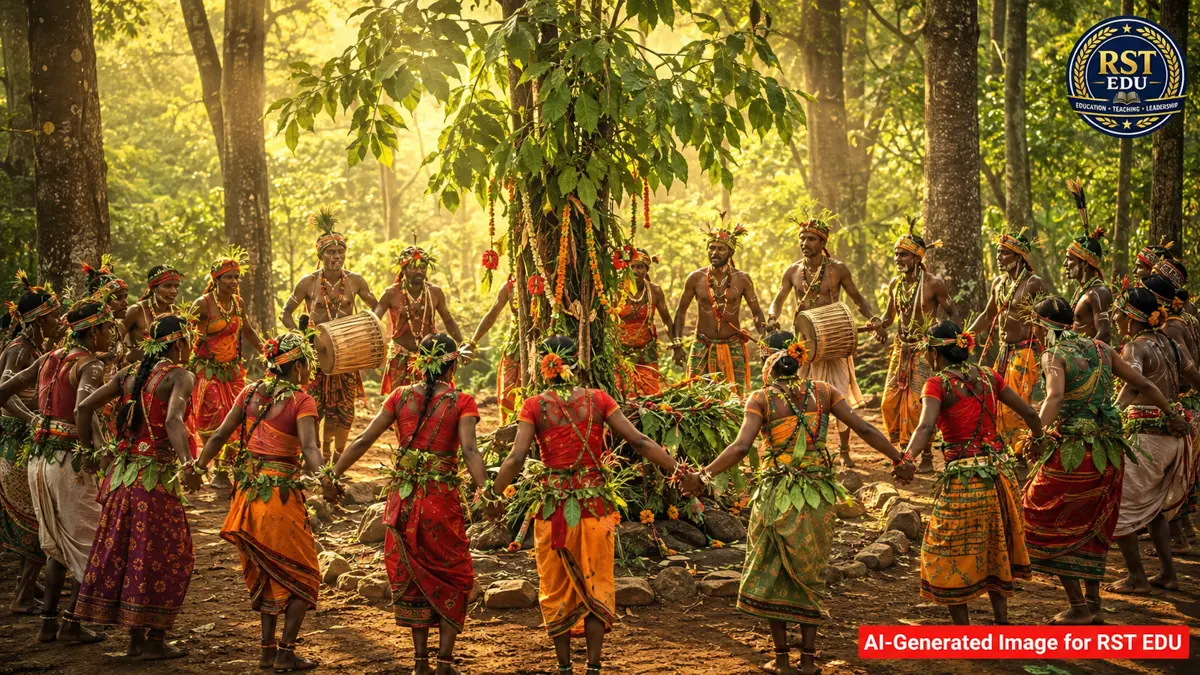
India is a land of diverse cultures, but its indigenous tribal folk dances hold a special place in my heart. Among them, Karma Dance and Pandavani stand out as powerful expressions of nature, history, and community spirit. These dances are not just art forms – they are the living soul of rural India.
What is Karma Dance?
Karma dance is a traditional tribal folk dance performed mainly in:
Madhya Pradesh
Chhattisgarh
Jharkhand
Odisha
Rituals and Performance
The dance begins with the worship of the Karma tree, a sacred ritual that honours nature’s generosity. Men and women join hands to form human chains and move in simple, mesmerising steps to the rhythmic beats of drums and bells.
Why I Love Karma Dance
This dance breaks all barriers of class, caste, and urban-rural divides. It brings communities together and teaches us to celebrate life with gratitude for the soil, rain, and forests that sustain us.
What is Pandavani?
Pandavani is a breathtaking folk art from Chhattisgarh. It brings the epic Mahabharata to life – especially the valour of the Pandava brothers and the anguish of Draupadi.
A One-Person Spectacle
It is usually performed as a one-person show – often by a woman artist. She holds a drum, switches between multiple characters, and acts out entire episodes using only her voice, expressions, and body language.
Why I Love Pandavani
This art form proves that you don’t need grand stages or expensive costumes to create magic. All you need is passion, a powerful voice, and a story that refuses to be forgotten. Pandavani keeps India’s ancient oral tradition alive in the most enchanting way.
Why Tribal Folk Dances Matter
They reflect the raw emotions of daily life – joy, sorrow, love, harvest, and prayer.
They use simple instruments like the dhol, nagada, and bamboo flute.
They are free from classical rigidity – every step is instinctive and natural.
For me, these dances represent “the other India” – the one that thrives in forests, riversides, and village squares, away from the glitz of mainstream media. They remind us that culture is not a museum piece – it is a living, breathing conversation between people, nature, and generations.
Final Thoughts
If you ever get a chance to witness a Karma or Pandavani performance, don’t miss it. You will not just watch a dance – you will feel the heartbeat of India’s tribal heritage.
If you enjoyed reading this, share it with your friends and help spread the beauty of India’s tribal traditions!
Discover more from RST EDU
Subscribe to get the latest posts sent to your email.